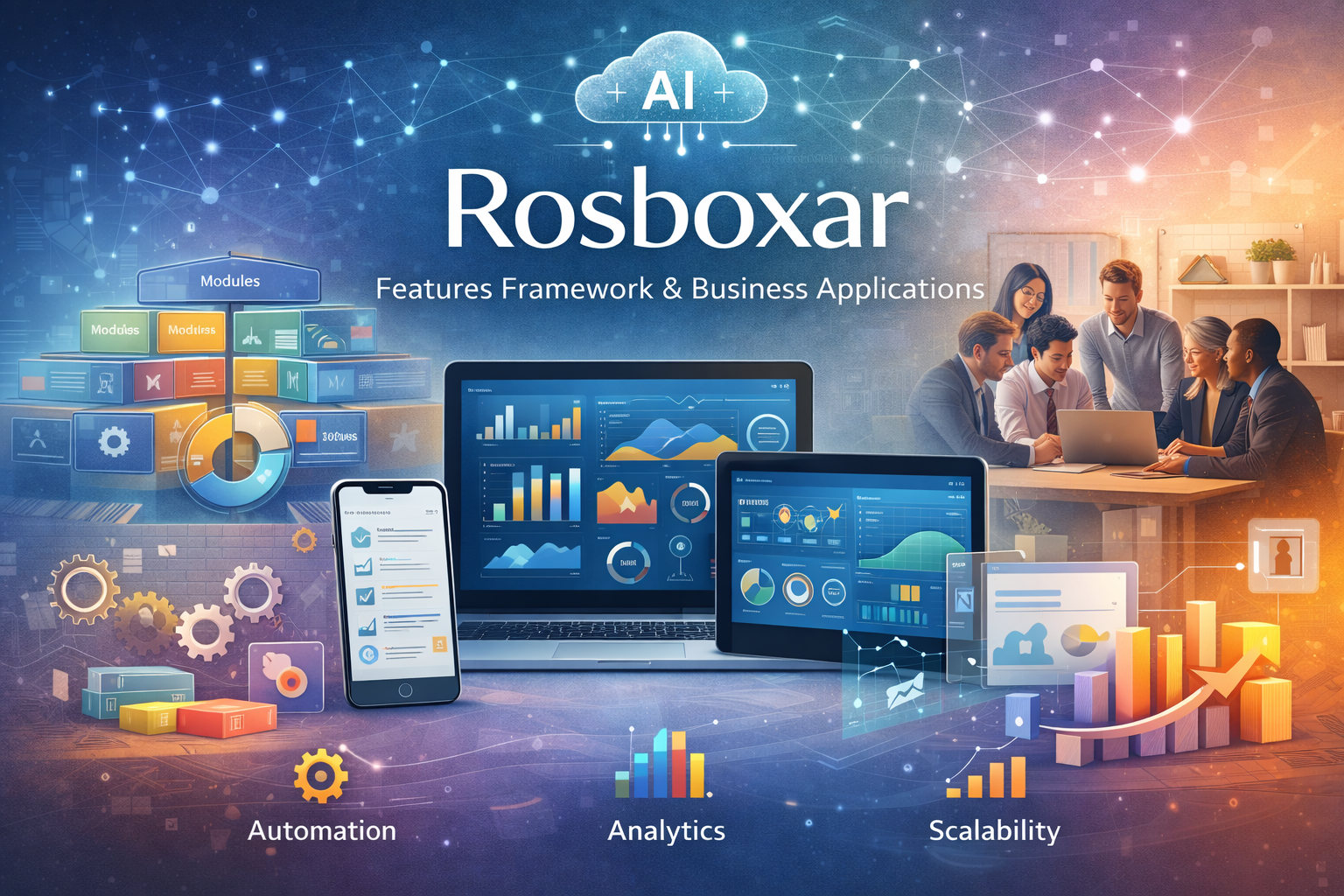
Rosboxar: Features Framework and Business Applications
In today’s rapidly evolving business and technology landscape, organizations are constantly searching for tools and frameworks that improve efficiency, workflow management, and decision-making. One emerging concept gaining attention across startups, enterprises, and tech communities is Rosboxar.
While the term may seem new, its applications are already wide-ranging from software platforms to strategic frameworks guiding startups and digital teams. Its unique combination of modular design, data-driven decision-making, and scalable processes allows businesses to optimize operations without overwhelming teams. As organizations face increasing complexity,it provides a structured yet flexible approach that supports growth, collaboration, and long-term sustainability.
What Is Rosboxar?
Rosboxar is a multi-dimensional concept, meaning its meaning shifts depending on the context in which it is applied. As a software platform, it streamlines business process management, automates workflows, facilitates data analysis, and enhances team collaboration. When viewed as a growth framework, Rosboxar provides a structured methodology that prioritizes logical decision-making, deliberate scaling, and long-term sustainability.
It also functions as a design philosophy, promoting modular, flexible, and efficient systems for project management, product development, and operational optimisation. Unlike traditional tools or rigid frameworks,integrates seamlessly with existing workflows, reduces unnecessary complexity, and empowers teams to focus on strategic priorities. Its adaptability makes it an ideal solution for startups, established enterprises, creative teams, and distributed or remote organisations, ensuring relevance across diverse business environments.
Evolution of Rosboxar
Rosboxar did not originate as a single product or company. Instead, it evolved through online discussions, startup communities, and tech experimentation. Over time, three main streams contributed to its development:
Software Development
Initially, Rosboxar emerged as a software solution designed to integrate multiple business tools into one platform. Users could manage projects, automate tasks, track performance, and analyze data without juggling multiple apps. Its intuitive interface and modular design made it a favourite among small and medium-sized enterprises seeking operational efficiency.
Startup Strategy Framework
Startup founders frequently face challenges such as rapid growth, fragmented teams, and ad-hoc processes that hinder efficiency and long-term success. Rosboxar addresses these issues by serving as a framework for structured scaling. It promotes aligned decision-making across departments, ensuring everyone works toward shared goals, logic-driven execution that reduces errors and guesswork, and sustainable, deliberate growth that prioritizes stability over short-term gains.
Productivity Mindset
In digital and creative contexts, Rosboxar encourages a modular approach to system design and project management. By breaking workflows and platforms into small, replaceable components, teams can make easy adjustments when priorities shift, conduct faster experimentation without disrupting the entire system, and reduce operational risk. This flexibility ensures that innovation does not come at the cost of stability.
Key Features of Rosboxar
Whether approached as a software platform or strategic framework, Rosboxar emphasizes clarity, efficiency, and adaptability. Here are its core features:
| Feature | Description | Benefit |
| Automation | Streamlines repetitive tasks | Saves time and reduces human error |
| Analytics | Real-time performance metrics and insights | Enables data-driven decision-making |
| Integration | Connects with multiple tools and platforms | Centralizes workflows and reduces context switching |
| Collaboration | Shared workspaces, file sharing, and communication tools | Strengthens teamwork and accountability |
| Security | Advanced encryption and compliance features | Protects sensitive business information |
| Customisation | Tailored dashboards and workflows | Fits diverse business models and industries |
| Scalability | Adapts to growing teams and complex projects | Supports both startups and large enterprises |
These features make Rosboxar both practical and conceptual, providing tangible tools while reinforcing a structured mindset for growth.
Rosboxar as a Growth Framework
As a strategic framework, Rosboxar emphasises the alignment of logic, execution, and long-term value across organizations. Its guiding principles provide a structured approach to decision-making and operational management. Intentional Design ensures that workflows and systems are purpose-built to support outcomes aligned with the organization’s mission, rather than ad-hoc activities that can create inefficiencies. Logical Validation requires that each decision is carefully cross-checked against relevant data, business goals, and potential consequences, reducing errors and enhancing reliability.
Value Continuity guarantees that short-term wins contribute to long-term credibility and sustainable growth, preventing actions that may compromise the organization’s future. Finally, Structured Scaling promotes deliberate growth, where departments operate in alignment and measurable impacts guide expansion, avoiding the chaos often associated with rapid development.
Rosboxar in Workflow Management
Rosboxar emphasises a modular and flexible approach to design, making it highly effective across software development, project management, and product systems. Its key practices focus on creating independent components, allowing each part of a system to be replaced, upgraded, or modified without disrupting the rest of the workflow.
This structure enables ease of experimentation, letting teams test new ideas safely and efficiently without risking major setbacks. Additionally, error reduction is built into the process through logical elimination and step-by-step validation, preventing mistakes, redundancy, and operational inefficiencies. For instance, software engineers can apply Rosboxar principles to avoid tightly coupled code, while project managers can structure tasks as independent modules, enabling quick adjustments and seamless scaling of projects.
Benefits of Using Rosboxar
Rosboxar’s holistic approach delivers numerous advantages for businesses, teams, and individuals:
- Enhanced Productivity Automation and simplified workflows reduce time spent on repetitive tasks.
- Data-Driven Decisions Analytics allow teams to anticipate trends and optimize processes.
- Scalability Modular design ensures solutions grow with organizational needs.
- Improved Collaboration Shared workspaces and clear task allocation reduce confusion.
- Reduced Stress Clear structure and logic reduce operational friction and team burnout.
- Sustainable Growth Aligns short-term wins with long-term strategy, increasing resilience.
- Cross-Functional Alignment Departments work in sync toward measurable outcomes.
Practical Applications of Rosboxar
Rosboxar’s versatility allows it to be applied across a wide range of domains, providing tailored solutions for different organizational needs. In startups, it structures rapid growth, prevents operational chaos, and ensures team alignment with long-term strategic goals. For enterprises, Rosboxar integrates multiple tools into a cohesive system, optimizes workflows, and facilitates efficient monitoring of KPIs.
In product development, it helps prioritize features logically, reduces technical debt, and maintains coherent product roadmaps. Remote teams benefit from standardized communication, streamlined workflows, and clear accountability across geographies, while creative agencies can manage projects modularly, minimize bottlenecks, and maintain flexibility under tight deadlines. Real-world case studies demonstrate its tangible impact.
Real World Case Studies
A retail business implementing Rosboxar for inventory management reduced stock shortages by 30% through real-time tracking and automated alerts; a marketing agency enhanced team efficiency, completing campaigns 25% faster using collaboration and project tracking tools; and a healthcare clinic streamlined patient data management, halving administrative workload while improving care delivery.
These examples underscore ability to deliver measurable efficiency, flexibility, and value across diverse industries and operational contexts.
Comparing Rosboxar with Traditional Systems
| Aspect | Traditional Systems | Rosboxar |
| Workflow | Fragmented, reactive | Integrated, deliberate |
| Decision-Making | Ad-hoc, inconsistent | Logical, mission-aligned |
| Scalability | Moderate | High and modular |
| Team Alignment | Siloed departments | Cross-functional coherence |
| Flexibility | Rigid | Adaptable and modular |
| Focus | Speed or efficiency | Alignment + long-term value |
Rosboxar’s structured and adaptable approach reduces errors, improves decision-making, and ensures scalable growth, making it ideal for modern digital teams.
Future Prospects of Rosboxar
The future of Rosboxar looks exceptionally promising as digital transformation, AI, and cloud technologies continue to reshape business operations. AI and machine learning capabilities are expected to enable predictive analytics, automating decision-making and anticipating trends before they emerge. Cloud integration will enhance remote collaboration, improve system resilience, and reduce infrastructure costs, making workflows more flexible and reliable.
Additionally, community-driven enhancements, driven by user feedback, will ensure the platform evolves in line with real-world needs and workflows. With these advancements, Rosboxar is poised to see broader adoption across startups, enterprises, and digital-first organizations, cementing its role as a versatile, future-ready framework for efficiency, scalability, and strategic growth.
How to Get Started with Rosboxar
To successfully implement Rosboxar, start by defining clear goals, identifying your business objectives or specific workflow challenges that need resolution. Next, explore its features, becoming familiar with the platform’s interface, automation capabilities, and analytics tools to understand how they align with your needs.
Begin cautiously by starting small, implementing a single feature or framework module before gradually expanding usage across the organization. Integrate Rosboxar with existing tools and software systems to create a seamless workflow and avoid unnecessary disruption. Providing adequate support is essential, so train teams with tutorials, guides, and hands-on resources to ensure smooth adoption.
Conclusion
Rosboxar is more than just a tool it represents a multi-dimensional approach that blends software functionality, strategic frameworks, and a modular design philosophy. Its core strengths lie in reducing operational complexity, aligning decisions with data and long-term goals, enhancing productivity and collaboration, and supporting scalable, adaptable growth.
Whether applied as a software platform, a structured methodology, or a workflow philosophy, Rosboxar delivers clarity, structure, and sustainability in today’s fast-paced business environment.
FAQs
What does Rosboxar mean?
A flexible framework and platform for workflow optimization, strategic growth, and modular design.
Is it a software tool?
Rosboxar can be a software platform but also functions as a strategic methodology.
Who benefits most from Rosboxar?
Startup founders, project managers, developers, and enterprise teams.
Does it replace other tools?
No, it complements existing systems, integrating workflows for efficiency.
Is it similar to Agile?
While iterative, Rosboxar focuses on logical validation, long-term alignment, and sustainable growth, beyond traditional Agile principles.